

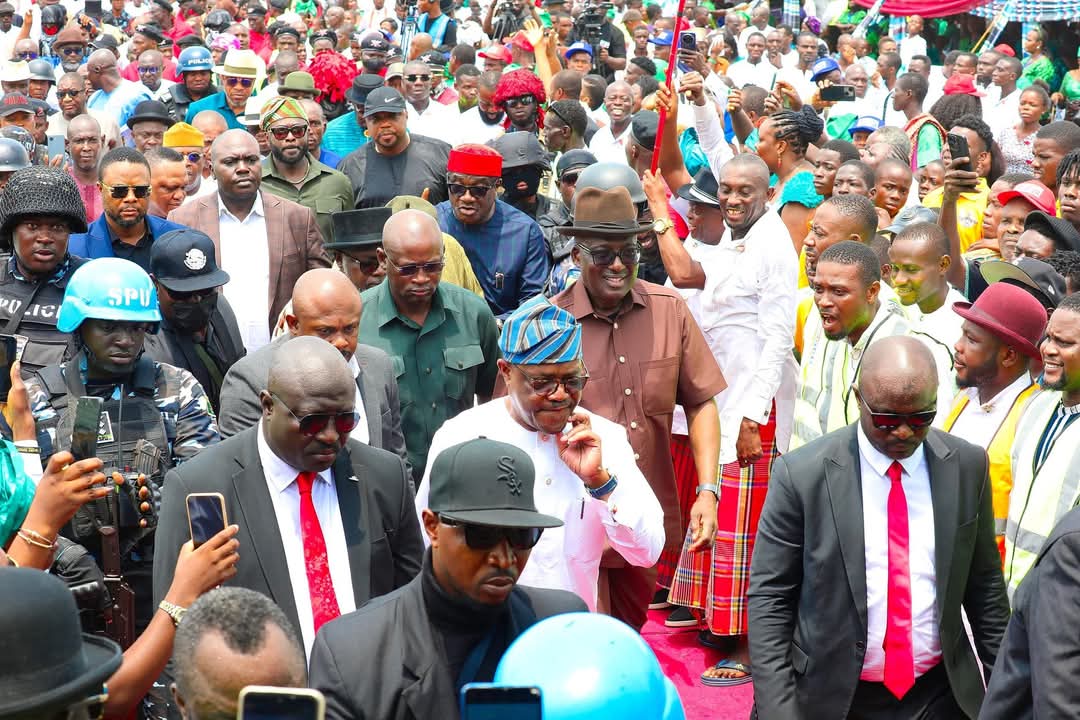
- Rivers State political crisis deepens as pro-Wike lawmakers allegedly set traps for Governor Fubara, but Chief Judge Simeon Amadi remains a major obstacle to his impeachment.
Rivers State Political Crisis: Pro-Wike Lawmakers Setting Traps – Jega Identifies the Only Barrier to Fubara’s Impeachment
The political crisis in Rivers State has taken a dramatic turn, with a growing power tussle between Governor Siminalayi Fubara and his predecessor, now Minister of the Federal Capital Territory (FCT), Nyesom Wike.

The crisis has created tensions within the state legislature, with pro-Wike lawmakers allegedly plotting moves to impeach the governor.
Renowned political analyst and former presidential appointee Mahmud Jega has weighed in on the crisis, stating that the only major barrier preventing the Rivers State House of Assembly from proceeding with impeachment is Chief Judge Simeon Amadi. His assertion sheds light on the legal and political maneuvers at play in the unfolding power struggle.
The Genesis of the Rivers State Crisis
The feud between Fubara and Wike did not start overnight. It can be traced back to political differences that emerged shortly after Fubara assumed office as governor. Initially, Fubara was widely seen as Wike’s protégé, handpicked to continue the policies and influence of the former governor.
However, cracks in their relationship soon became apparent, particularly in governance style, appointments, and control of state resources.
While Wike has since moved on to the federal level as the Minister of the FCT, he is still believed to wield significant influence over the political structure in Rivers State.
Historic loyalists in the House of Assembly, sensing a shift in power, have been accused of attempting to remove Fubara through impeachment proceedings.
Mahmud Jega’s Analysis: The Role of Chief Judge Simeon Amadi
Speaking on Arise Television, Mahmud Jega provided an expert analysis of the ongoing crisis, noting that despite the political will among pro-Wike lawmakers to oust the governor, one major stumbling block remains: the Chief Judge of the state, Simeon Amadi.
According to Jega, the impeachment process requires the Chief Judge to set up a panel to investigate any allegations of misconduct against the governor. However, if the Chief Judge refuses to comply or remains neutral, the process stalls.
This legal bottleneck is what is currently preventing the impeachment move from gaining traction. It highlights how judicial independence can play a crucial role in the stability of a state government, acting as a check against political power struggles.
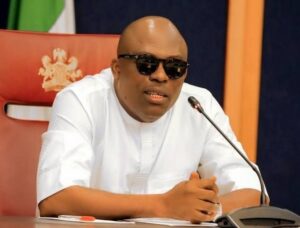 Are Pro-Wike Lawmakers Laying Traps for Fubara?
Jega further suggested that lawmakers loyal to Wike were actively searching for a justifiable reason to impeach Governor Fubara. He implied that political traps were being set, and the governor needed to tread carefully to avoid falling into a situation that could legally justify his removal.
This raises serious concerns about the motivations behind the impeachment attempts. Are they genuinely about governance failures, or are they politically motivated moves designed to maintain control over the state’s affairs?
There have been reports of friction between Fubara and the House of Assembly, with legislative actions often appearing to be influenced by external forces. If lawmakers are indeed setting traps, it suggests a strategy aimed at frustrating the governor’s administration until a misstep is made—one that could be used as grounds for impeachment.
Wike’s Stand on the Crisis
Interestingly, Nyesom Wike has denied any involvement in the impeachment plans against his successor. Speaking on Saturday, he stated that he does not intend to obstruct members of the Rivers State House of Assembly from performing their constitutional duties.
His statement, however, has been met with skepticism. Political observers argue that Wike’s influence in Rivers State politics remains strong, and his allies in the Assembly are unlikely to act without his tacit approval.
Moreover, Wike has been known for his assertive political style, and many believe that his approach to governance does not accommodate opposition from his political associates.
If this is the case, his relationship with Fubara was bound to face difficulties the moment the governor attempted to establish independence.
The Legal and Political Complexities of Impeachment
Impeachment in Nigeria is a serious constitutional process that requires strict adherence to due process. For a governor to be removed from office, the process must follow specific steps, including:
- Petition by Lawmakers – A formal complaint must be filed by a majority of House members, specifying the allegations against the governor.
- Chief Judge’s Role – The Chief Judge is required to constitute a seven-member panel to investigate the allegations.
- Panel Investigation – The panel must conduct an inquiry and determine whether the allegations are valid.
- Assembly Vote – If the panel finds the governor guilty, the House of Assembly must vote with a two-thirds majority to remove him from office.
Given these conditions, the refusal of Chief Judge Simeon Amadi to be drawn into the political dispute makes it challenging for the impeachment process to move forward. Without his cooperation, the legal framework required for Fubara’s removal remains incomplete.
Political Implications for Rivers State
The ongoing power tussle in Rivers State has far-reaching implications. If unresolved, it could lead to political instability, policy paralysis, and governance inefficiencies.
Additionally, the battle between Fubara and Wike’s loyalists could set a dangerous precedent for future leadership transitions in the state.
For Governor Fubara, navigating this crisis requires both political skill and legal acumen. He must consolidate his control over the executive arm of government while maintaining a working relationship with the legislature.
Failure to do so could result in prolonged instability, affecting governance and development in the state.
For Wike and his loyalists, the challenge is to ensure that their political influence does not come across as excessive meddling, which could backfire in future elections. While Wike remains a powerful figure, his role as a federal minister means that he must balance his national responsibilities with his interests in Rivers State.
Public Reaction and Stakeholder Responses
The crisis has drawn mixed reactions from political analysts, civil society organizations, and the general public. Some believe that the impeachment attempt is a deliberate effort to undermine Fubara’s authority, while others argue that the governor must address the concerns raised by lawmakers.
Legal experts have emphasized the importance of judicial neutrality in the process, warning against the politicization of impeachment proceedings. Some stakeholders have also called for mediation efforts to de-escalate tensions and ensure that governance in Rivers State is not derailed.
The Road Ahead: What Next for Rivers State?
As the situation unfolds, several potential outcomes could emerge:
- Political Reconciliation – A possible truce between Fubara and Wike could ease tensions and restore stability in the state.
- Judicial Intervention – If the impeachment process is pursued aggressively, the courts may be forced to step in to interpret constitutional provisions.
- Continued Political Crisis – If the battle persists, Rivers State could face prolonged governance issues, affecting development projects and public services.
Regardless of the outcome, the political landscape in Rivers State is undergoing a significant transformation. How Governor Fubara manages this crisis will determine not only his political future but also the stability of the state.
Conclusion
The Rivers State political crisis remains a high-stakes power struggle, with Governor Siminalayi Fubara and Minister Nyesom Wike at the center of the storm.
While pro-Wike lawmakers seem determined to push for Fubara’s impeachment, the legal process remains stalled due to the role of Chief Judge Simeon Amadi.
As the situation unfolds, Nigerians will be watching closely to see how it plays out and whether political peace will return to the oil-rich state.
The key question remains: will Fubara survive this political storm, or will the forces against him eventually succeed?
Only time will tell.
